
Where has discovery gone? Find out how you can capitalize on modern search to drive positive business outcomes.
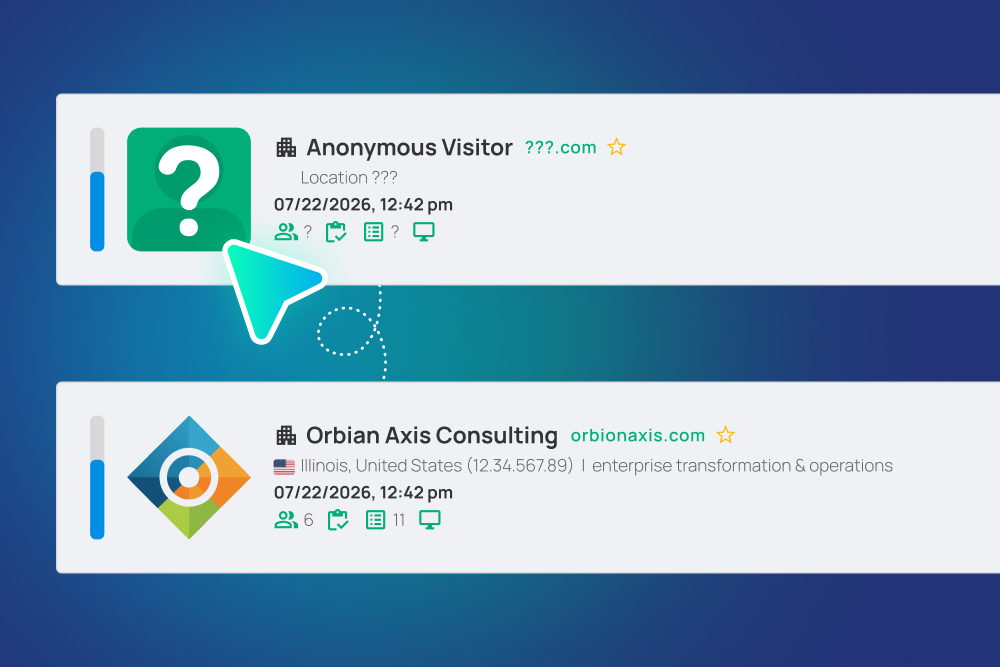

Only 3–3.5% of B2B website visitors self-identify through a form, but what happens with the vast amount of anonymous bystanders that disappear? Anonymous website visitors make up the vast majority of digital web traffic, leaving behind little to no identifiable information. This means very little data your team can use as effective leads, which can prove costly for your SEO and paid media spend. However, that doesn’t mean you have to settle for leaving all those opportunities on the table.
In this guide, we will walk you through how to gather insights and data on this website traffic with visitor intelligence technology and, ultimately, transform unknown leads into actionable sales handoffs.
An anonymous website visitor is someone who browses your site without identifying themselves through a form submission or another direct interaction. Their activity can still appear in your analytics, including the pages they view, how long they stay and where they click. What’s missing is the connection between that activity and the company or person behind it.
Visitor identification technology helps fill that gap. LeadLander connects website activity with company information and, when available, individual visitor data outside of standard website analytics. That gives your team a clearer picture of who’s showing interest, what they’re exploring and which opportunities may deserve a closer look.
The right tool should help your team turn website activity into useful sales and marketing insights. As you compare options, consider how each fits your goals, workflows and existing technology:

Look for a tool that connects with your CRM and other platforms so your team can act on visitor insights without adding unnecessary manual work.
Ask how visitor matches are made, what information is available and what identification rates you can realistically expect.
Prioritize tools that help you organize visitors and set alerts based on the companies, behaviors and buying signals that matter to your business.
Understand whether the tool identifies companies, individuals or both. Get clarity on when individual visitor data is available and how contact information can support outreach.
We’ve talked about how visitor identification tech can help you figure out who is visiting your site. Now, let’s talk about the specifics of what you can do with that technology.
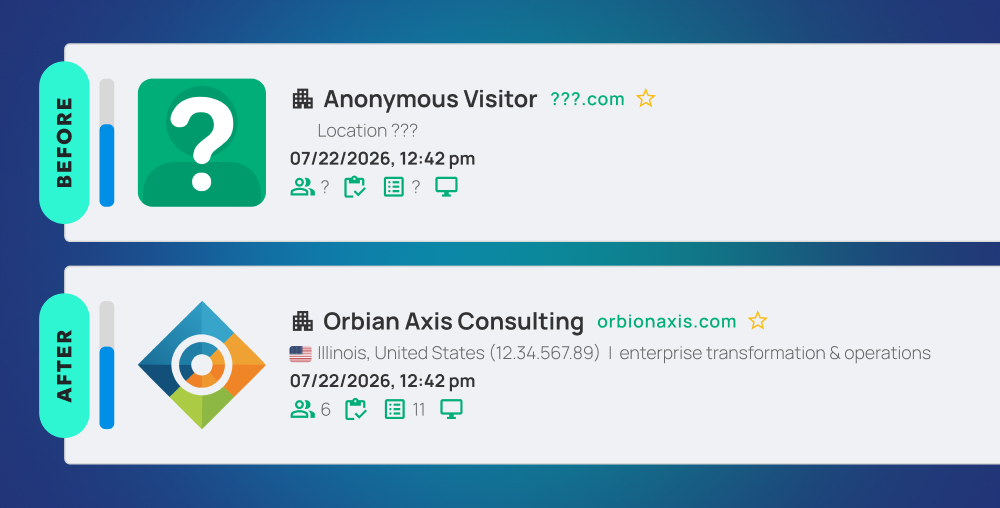
IP-to-company matching compares a visitor’s business IP address to a database of known company IP ranges. This method is best used for office and on-network traffic, primarily because mobile and remote traffic is more difficult to resolve. Most times, mobile carrier connections often show up as internet service providers rather than their employer, which can prove costly when attempting to deduce who is truly behind the screen.
Identity graphs layer device data, web cookies and third-party identity databases alongside IP-matching in order to improve overall accuracy in resolving identities. In some cases, identity graphs can even surface a named contact rather than just the title of a company. Currently, person-level identification accounts for 5-20% of all US B2B traffic among top performing vendors, whereas company-level identification covers a larger 30-65% range.
Another piece worth noting is that under the EU’s General Data Protection Regulation, or GDPR, person-level identification is usually treated as a legitimate-interest activity, with match rates of roughly 40-55% on companies headquartered in the EU.
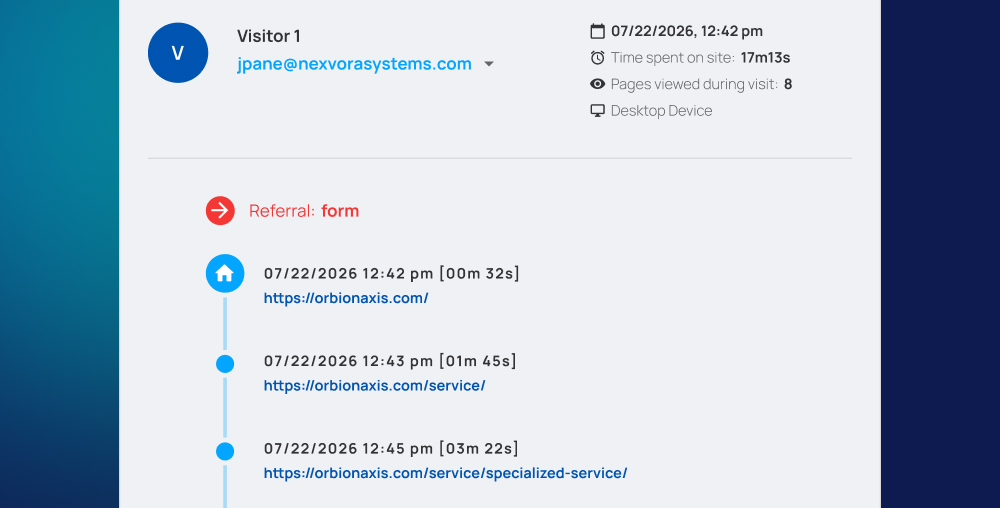
You can pull useful data from the sea of metrics in your general analytics programs, but it’s often not enough to paint a full picture for your sales teams hunting for leads. Here’s the data you can add to the pile with visitor identification platforms:
No tool can identify all 100% of traffic, but it can give you enough to bridge the gap between “a complete unknown” and “someone at this specific company on this specific page.” Match rates, however, can vary widely by vendor, geography and the specific device used to access the site.
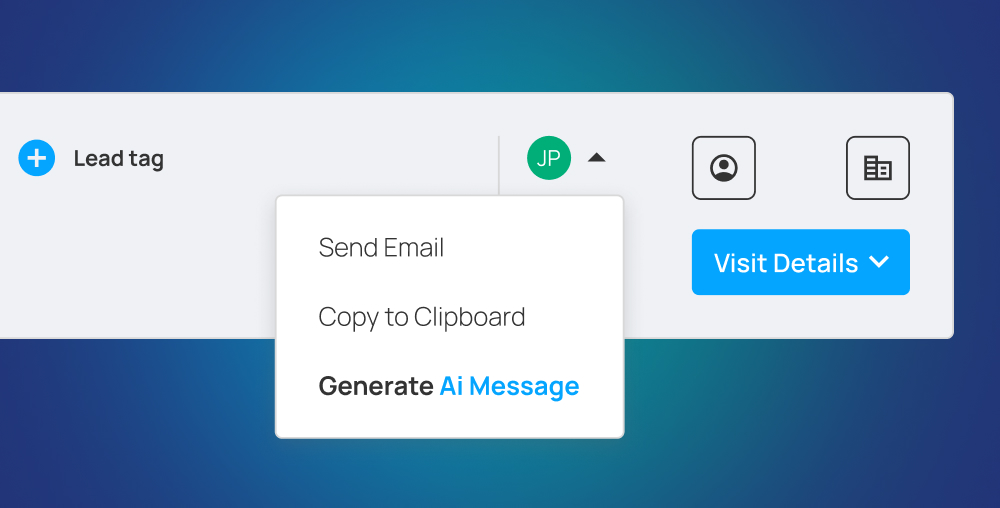
So, you’ve pinpointed specific companies as leads, perhaps drilling all the way down to specific, named employees. What do you do with this information?
You can now:
These are the insights that you’re truly looking to gain from your paid media spend, and with this data, you can move forward on sales decisions.
Picture this: A target account matching your ideal customer profile lands on your site from an organic search result. Over a single session, someone from that company visits your pricing page, reading through two or three case studies before leaving. No form filled out, no chat started, no trace left behind in a standard analytics dashboard beyond a session that looks like any other.
Visitor identification tools change what happens next. This visit, which originally looked like a non-event, is tied to the target company through IP-to-company matching, then scored against your ideal customer profile by factoring in page depth, company size and industry fit. That combination pushes the account into “high intent” territory rather than getting lost in a sea of anonymous traffic.
Because the account is already flagged as a target, the system triggers a real-time alert to the assigned sales rep. They’ll receive a notification with new context gathered from the prospect’s time on site, not just a generic notification. The rep then reaches out that same day, and instead of an email referencing only a company name off a list, they mention the exact case studies the prospect read. This ultimately turns what would’ve been a cold outreach into something that feels like a continued conversation.
That’s the gap that visitor intelligence closes on: the difference between traffic you paid for and traffic you can actually act on.

Earlier this year, TriMark Digital acquired LeadLander, an AI-powered visitor intelligence platform, to help our customers turn gathered intelligence from site visits into powerful sales insights that help close deals. We were an active customer long before acquisition, using it to empower our clients with deeper site analytics and ultimately convert high-intent site visitors. Visitor intelligence does more than just arm you with information. It helps sales and marketing teams score and prioritize leads and gives you the key details you need to make the most of sales opportunities.
Interested in learning more about how LeadLander can fit into your ecosystem of marketing intelligence solutions? Drop us a line.
CONTACT US
We don’t do one-size-fits-all. We build custom strategies that solve real business problems and drive results you can measure. Let’s talk about how we can grow your brand—starting today.
"*" indicates required fields
