In this blog: A campaign goes viral when the audience, not the ad budget, rapidly and organically shares the content. ...


Capturing Gen Z’s attention requires adapting traditional marketing playbooks. As the first generation raised entirely online, these consumers immediately filter out heavy promotional messaging, favoring brands that show up organically and offer immediate value.
Driving Gen Z interest online comes down to authentic storytelling delivered naturally on relevant social channels. Because these digital natives filter content in seconds, immediate relevance and a strong hook also matter. Keep reading to learn how to market to this audience without reading as inauthentic.
Born between 1997 and 2012, Gen Z is the first generation raised alongside technology like smartphones, high-speed internet and social media. They’re incredibly tech-savvy, leveraging digital tools to discover products, evaluate credibility and make purchases in ways fundamentally different from older generations. They also bypass traditional marketing channels, relying instead on peer validation, creator recommendations and instant digital proof to drive their purchasing decisions.
Since they grew up in a non-stop digital feed, Gen Z processes information faster than any previous generation. Marketers often misinterpret this rapid processing as a lack of focus, but it actually functions as a hyper-efficient filter for relevance.
Gen Z’s global spending power, estimated at $2.7 trillion in 2024, is projected to reach $12.6 trillion by 2030, marking the fastest economic expansion of any living generation. Brands that want to tap into this massive potential must embrace curated marketing approaches that better speak to this younger audience.

Missteps in engaging Gen Z can happen when brands prioritize short-term attention over building long-term credibility. A few approaches to be thoughtful about include:
These approaches aren’t necessarily off-limits, but they work best as part of a broader, authentic strategy. Focusing on consistency and long-term connection can help brands build stronger relationships with Gen Z beyond short-term engagement spikes.
Executing a successful campaign targeting Gen Z requires keeping in mind where and how they search, communicate and navigate online spaces. Below, we’ve outlined core campaign tactics that often work best among this target audience.
| Tactic | Why It Works | Best Formats | Best Platforms |
| Short-form video | Fast, entertaining, easy to share; matches how Gen Z filters content in seconds | Reels, Shorts, TikToks, 15–30 sec clips | TikTok, Instagram, YouTube |
| Creator and peer partnerships | Higher trust than brand-led ads; audiences treat creators like friends, not billboards | Reviews, collabs, duets, sponsored posts | TikTok, Instagram, YouTube |
| Authentic, unscripted storytelling | Gen Z filters out polish fast; relatable, human content earns a second look | Behind-the-scenes clips, founder stories, customer spotlights | Instagram, TikTok |
| Interactive content | Turns passive scrollers into participants, which drives real engagement | Polls, Q&As, challenges, quizzes, AR filters | Instagram, TikTok, Snapchat |
| User-generated content | Feels more credible than brand content because it comes from real customers | Reviews, unboxings, try-on clips, remixes | TikTok, Instagram |
It’s important to implement each of the tactics in the right format, and at the right point in campaigns. Here’s a little more about how that might look in practice.
Viewing short-form video is one of Gen Z’s primary digital interactions. To successfully capture their attention in these videos, front-load key value propositions within the first two seconds rather than saving messaging for a traditional end-card. Doing so requires immediate narrative momentum, strong audio integration and visual pacing designed specifically for mobile feeds.
By deploying an integrated short-form video and social strategy, TriMark drove 1.6 million impressions, 381,000 Reel plays and a 15% lift in annual revenue for Custom Patch Hats. See how strategic frameworks convert scrollers into buyers in our client case studies.
Gen Z is deeply skeptical of traditional brand messaging, placing far greater trust in individual creators and peer networks. Partnering with micro-influencers and niche community figures allows brands to tap into established credibility. It also helps creators translate brand offerings into a more authentic voice.
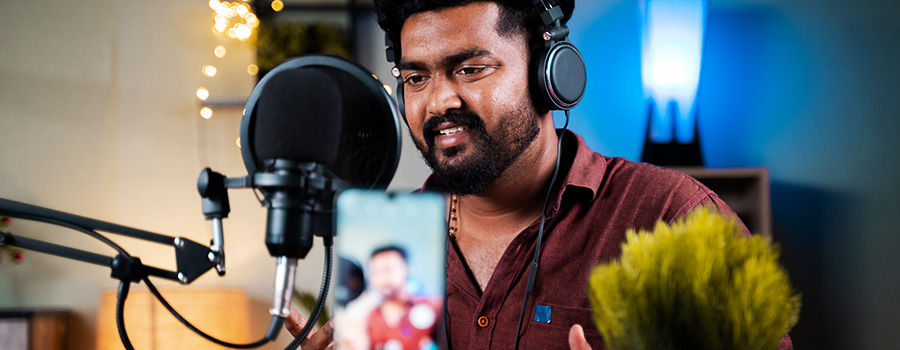
Over-engineered content signals immediate irrelevance to younger audiences. Content that feels raw, spontaneous and human consistently performs better and builds genuine rapport. A few great examples are materials that showcase behind-the-scenes processes, unscripted product testing and candid team perspectives.
Passive viewing yields lower brand recall compared to active participation. Integrating interactive stickers, community polling, user challenges and custom augmented reality filters transforms scrollers into active participants. They’re also great vehicles for brands to collect real-time consumer feedback. Design every interactive touchpoint around a clear, simple action that requires minimal user effort.
Search behavior is shifting rapidly from traditional search engines toward conversational AI platforms like ChatGPT and Claude. Ensuring brand visibility requires optimizing websites, landing pages, blogs and other content for the ways these large language models (LLMs) crawl the internet for sources. Tactics like structuring data, publishing clear FAQ frameworks and maintaining authoritative third-party coverage helps AI engines surface your brand during conversational searches.
Gen Z is packed with internet natives and that means there’s no one platform where you’ll find them. Instagram serves as a primary ecosystem perfect for honing your marketing approach. Capitalizing on this reach requires understanding Instagram’s organic strategy. Meanwhile, TikTok commands the deepest daily engagement and total time spent onsite, functioning as both an entertainment feed and a primary search engine. Capturing audience share requires aligning campaign creative to the needs of your audience on each specific platform.
Capturing Gen Z’s attention takes more than isolated social posts or one-off campaigns. Brands need a connected strategy that brings together short-form content, authentic positioning, peer-driven messaging and AI optimization to build familiarity and trust across the channels Gen Z uses to discover and evaluate brands.
As younger consumers increasingly turn to social platforms and AI-powered tools for discovery, TriMark helps brands stay visible and relevant as those behaviors evolve. Ready to build a strategy that connects with today’s audiences and adapts for what’s next? Let’s chat.
CONTACT US
We don’t do one-size-fits-all. We build custom strategies that solve real business problems and drive results you can measure. Let’s talk about how we can grow your brand—starting today.
"*" indicates required fields