
In this blog: Capturing Gen Z’s attention requires adapting traditional marketing playbooks. As the first generation raised entirely online, these ...

Learn how audience targeting is expanding ChatGPT Ads by giving advertisers greater control over who can see their campaigns. See how audience lists, geographic targeting, and Context Hints work together to improve campaign relevance, manage budget allocation, and make conversational advertising viable for more businesses.
OpenAI continues to expand the capabilities of ChatGPT Ads, and one of the most meaningful updates for advertisers is the addition of audience targeting.
Until now, advertisers could primarily target campaigns using geography and Context Hints—signals that helped match ads to relevant conversations. While effective for understanding user intent, advertisers had limited control over who their campaigns reached. The addition of audience targeting represents a significant step forward, giving marketers another layer of precision while maintaining ChatGPT’s conversation-first experience.
For agencies and in-house marketing teams alike, this expands the number of campaigns and clients that can realistically leverage ChatGPT Ads, making the platform a much more viable addition to a broader paid media strategy.
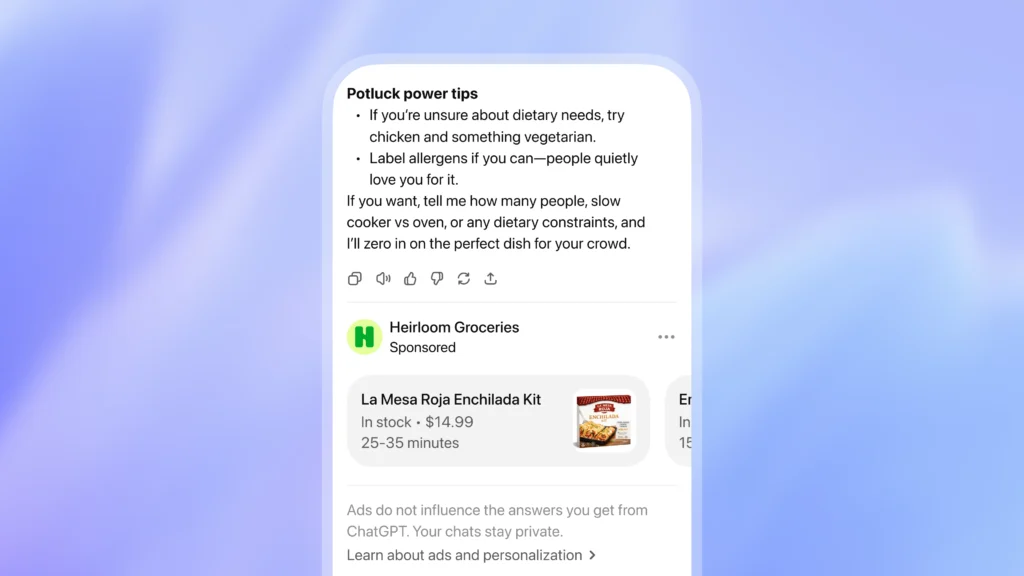
Ad example and image from OpenAI
Digital advertising platforms have long relied on audiences to improve campaign relevance and efficiency. Whether targeting users based on interests, purchase intent, demographics, or first-party data, advertisers have become accustomed to building campaigns around who they want to reach.
ChatGPT introduces a different dynamic. Rather than matching ads to search queries or social feeds, ads appear within relevant AI conversations. Audience targeting complements this approach by helping advertisers narrow the pool of users who are eligible to see their ads, while Context Hints continue to describe the types of conversations where those ads should appear.
For advertisers, this creates a more intentional targeting strategy that combines both who the user is and what they’re discussing.
One challenge during the early rollout of ChatGPT Ads was that certain businesses required more precise audience controls before the platform became a viable advertising channel.
With the introduction of audience targeting, advertisers can now utilize audience lists to target or exclude specific audiences such as previous customers, helping improve campaign relevance and providing greater control over how advertising budgets are allocated. The audience list must exceed 25,000 users so some businesses or campaigns may be limited by this criteria.
Combined with geographical targeting and Context Hints, advertisers can now build campaigns that more closely resemble the strategic planning they’re accustomed to on established advertising platforms. This significantly expands the number of clients and industries that can effectively use ChatGPT Ads while maintaining the unique benefits of conversational advertising.
Audience targeting should be viewed as another layer within ChatGPT’s targeting framework—not a replacement for Context Hints.
The strongest campaigns will combine multiple targeting signals, including:
Together, these signals provide a more complete targeting strategy that balances geographic relevance, audience selection, and conversational intent.

Although ChatGPT Ads remain in their early stages, the platform is evolving quickly. As targeting capabilities continue to mature, advertisers will have more opportunities to reach users during moments of active research, planning, and decision-making.
For marketers, the opportunity extends beyond simply adopting another advertising platform. It represents a shift toward engaging users during conversations where they are actively exploring solutions, comparing options, and making informed decisions.
At TriMark Digital, we’ve been actively testing ChatGPT Ads as new capabilities become available and have seen the platform evolve rapidly over the past several months. The addition of audience targeting represents another meaningful step toward making conversational advertising a scalable channel for a broader range of advertisers.
As the platform continues to mature, we’ll continue testing new features, sharing our learnings, and helping clients understand where ChatGPT Ads can complement their existing paid media strategy.
Audience targeting makes ChatGPT Ads more practical, but its real value comes from how it works alongside geographic targeting, Context Hints and an advertiser’s broader paid media strategy. Discovery is becoming more conversational, buying decisions are increasingly shaped by context, and brands need a clearer understanding of both who they want to reach and what those users are trying to accomplish. The advertisers that succeed will not simply adopt ChatGPT Ads because the platform is new. They will use the right audience data, messaging and intent signals to appear at meaningful points in the customer journey.
As conversational advertising continues to develop, the opportunity will come from thoughtful integration, disciplined testing and measuring whether the platform reaches users at the moments when they are actively researching, comparing options and making decisions. TriMark Digital is ready to take clients those next steps forward in this new frontier of AI powered paid search.
CONTACT US
We don’t do one-size-fits-all. We build custom strategies that solve real business problems and drive results you can measure. Let’s talk about how we can grow your brand—starting today.